Section 104 pooling for crypto, explained
The Section 104 pool is the default way the UK works out the cost of crypto you sell. For each token you hold one pool that tracks the total quantity and the total allowable cost. When you buy, both go up; when you sell, you remove a proportional share of the pooled cost as your cost basis. The pool only applies after the same-day and 30-day rules have been checked first. It deliberately ignores which specific coins you sold — everything of the same type is averaged together.
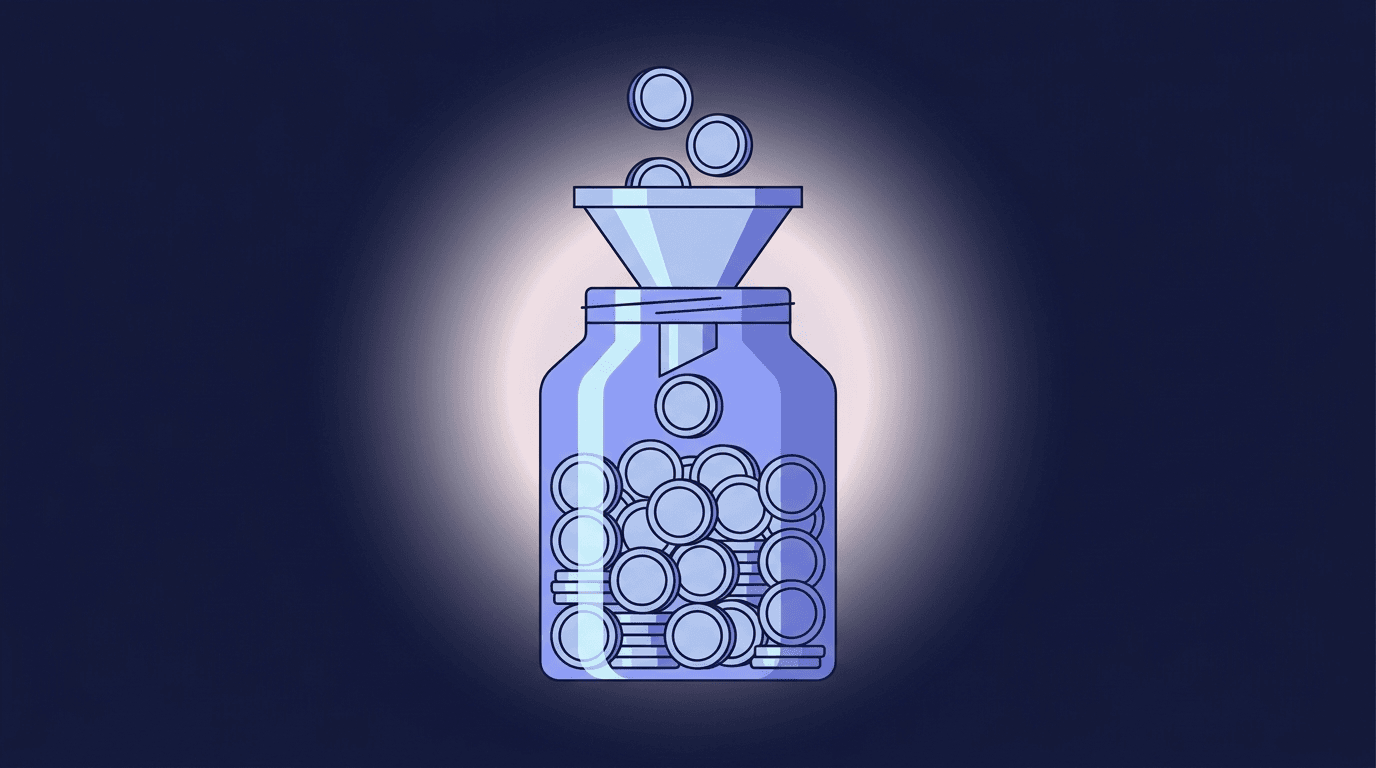
How the pool works
Think of the pool as a running average. Every acquisition of a token adds its quantity and its allowable cost (what you paid, plus purchase fees) to that token's pool. When you dispose of some of the token, you don't pick which coins you sold — you remove a proportional slice of the pool.
If your pool holds 10 ETH with a total cost of £20,000, the pooled cost is £2,000 per ETH. Sell 4 ETH and your allowable cost for that disposal is 4 × £2,000 = £8,000, and the pool drops to 6 ETH / £12,000. The average cost per unit doesn't change on a sale — only on a purchase at a different price.
A worked example
Suppose you made these BTC transactions:
- Jan: buy 0.5 BTC for £15,000 → pool: 0.5 BTC / £15,000
- Mar: buy 0.5 BTC for £25,000 → pool: 1.0 BTC / £40,000 (avg £40,000/BTC)
- Sep: sell 0.25 BTC for £12,000 → cost = 0.25 × £40,000 = £10,000 → gain £2,000; pool left: 0.75 BTC / £30,000
What comes before the pool
The pool is the third rule in the matching order, not the first. A disposal is matched first against acquisitions of the same token on the same day (the same-day rule), then against acquisitions in the following 30 days (the 30-day "bed and breakfast" rule). Only the remainder is matched against the Section 104 pool — and only against acquisitions made on or before the disposal date.
Getting this order wrong is one of the most common DIY spreadsheet errors, because a purchase made weeks after a sale can retroactively change the sale's cost basis.
Fees and the pool
Purchase fees (trading fees, network fees paid to acquire) increase the pool's allowable cost. Disposal fees don't touch the pool — they reduce the proceeds of the sale instead. Both directions reduce your gain, but they enter the calculation in different places.
Run your own numbers — free
Our calculator applies these rules to your transactions and shows the full working for every disposal — same-day, 30-day and Section 104 matching, per tax year.
Open the calculator →Frequently asked questions
Does each cryptocurrency have its own Section 104 pool?
Yes. BTC, ETH, and every other token you hold each has its own separate pool. A trade between two tokens reduces one pool and adds to the other.
Do crypto-to-crypto trades use the pool?
Yes. Swapping token A for token B is a disposal of A (matched against A's pool under the normal rules) and an acquisition of B (added to B's pool) at the GBP market value of the trade.
What happens if I sell everything?
The pool empties — quantity and cost both go to zero. If you buy back in later, a new pool starts (but watch the 30-day rule if you re-buy within 30 days of the sale).
Sources & methodology
- HMRC Cryptoassets Manual CRYPTO22200 — pooling and the same-day / 30-day identification rules
- HMRC Cryptoassets Manual
Tool v0.2.0 · sources last checked 6 July 2026. This guide is general information, not tax or financial advice — verify your position with a qualified professional before filing.